The 200Bn Club is the institution built to prove that founder assessment can be a science - and to find, test and back founders before they become inevitable.
We are named for the £200bn of value the UK leaves unclaimed by backing too narrow a set of founders. That number was our starting point, not our boundary.
We built the 200Bn Method where conventional assessment fails most often - women and overlooked founders, the founders pattern-matching misreads most - because that is the only place an instrument can prove it measures founders rather than patterns. If a method finds winners where the pattern sees nothing, the signal is real. Ours did: 760+ founders assessed, £154m+ raised. So we did what you do with a proven instrument - pointed it at everyone.
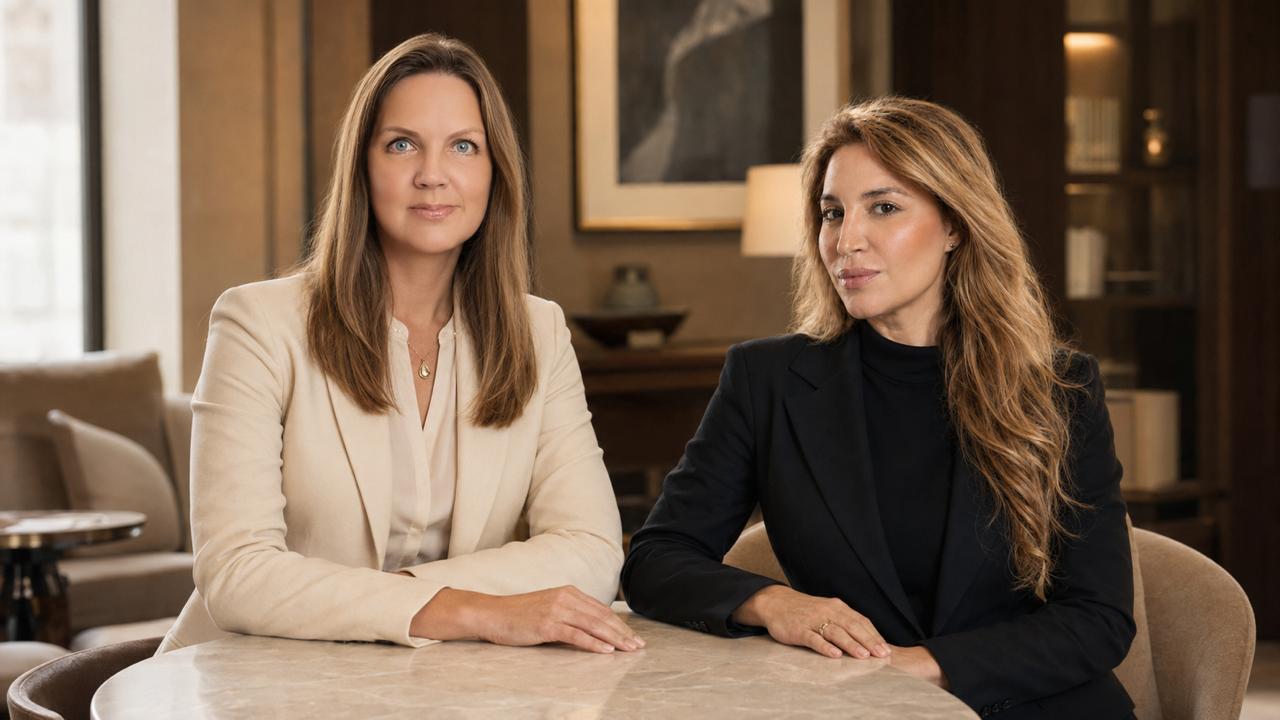
The 200Bn Club is co-led by Dr Amber Ghaddar and Bridget Greenwood FRSA. They built it because they had seen the same failure from different sides: good founders misread, strong businesses passed over, feedback arriving too late to be useful, capital following familiarity instead of evidence.
Amber saw it through capital, risk, markets and scientific assessment. Bridget saw it through financial advice, founder support, community and programme delivery.
The market does not need to lower the bar. It needs to read the signal properly.
A polymath and polyglot, Amber has built her career across molecular medicine, neuroscience, nanotechnology, institutional finance, quantitative modelling, digital assets and early-stage investing.
Her venture career began in biotech financing in Paris. She then spent close to a decade at Goldman Sachs and later JP Morgan London, where she led Macro Systematic Trading Strategies and covered central banks and bank treasuries in bond trading. Her work focused on systematic risk, multivariate signals and capital allocation under uncertainty.
She co-founded and exited AllianceBlock, one of the few female-led blockchain infrastructure companies of its era, which reached a peak $400 million market cap. She has advised governments and regulators on digital asset policy across major markets, spoken at TEDx and Davos, and been featured by the Financial Times, Sky News, BBC, CNBC, Bloomberg, Forbes and Nasdaq.
Later, she spent a couple of years as a guest lecturer on EDHEC Business School's flagship Master in Finance - ranked in the Financial Times' global top five - teaching digital assets and fintech.
She holds a PhD in Molecular Medicine and three MSc degrees - in Neuroscience, Microelectronics and Nanotechnologies, and International Risk Management - and graduated from McGill Canada and HEC Paris, with military training alongside GIGN, the French National Gendarmerie's elite tactical unit, at Saint Astier. She is the architect of the 200Bn Method and built the research-backed system behind The 200Bn Club.
Her guiding principle: We invest in spikes of greatness, not lack of weakness.
Bridget Greenwood FRSA brings the discipline of an athlete, the judgement of a financial adviser and the practical instinct of a startup operator.
A former member of the Scotland Elite National swim team competing internationally, Bridget understands what high performance actually requires: consistency, feedback, endurance and the ability to keep showing up long after the early excitement has faded.
Before co-founding The 200bn Club, Bridget was the CMO of BCB Group, which went on to raise a $60 million Series A. Founder of The Bigger Pie, Y Combinator 2019 graduate, and an Independent Financial Adviser.
Through The Bigger Pie, Bridget built a multi-award-winning platform supporting women in tech, creating a network and active community around role models, leadership skills and getting female founders funded.
As one of the leaders at Let's Fund More Women, Bridget worked with Innovate UK to capture founder feedback and help shape changes in their national grant programme.
Bridget's work is grounded in a simple belief: founders should not leave a process with silence when they could leave with diagnosis.
Her guiding principle: Leave No Founder Behind.
Female and overlooked founders are not less investable. They are less visible, less decoded and less often assessed against the right evidence. A better founder system creates a better capital market: founders receive useful diagnosis, programmes can measure progress, investors see cleaner signal, and capital reaches talent before the market catches up.
We are not here to make the system feel better. We are here to make it work better.
The 200Bn Club exists to identify the spike, close the gaps and build the evidence capital can act on. It began as a club. It is now a method, a programme and a standard. The destination is a fund that backs these founders with capital.